Construction Cost Overruns: Understand Causes and Control Costs
12 November 2026A budget overrun can change the economics of an entire development. In construction, it occurs when the cost of completing a project exceeds its approved budget. Knowing how to handle construction cost overruns means identifying what is driving the increase, assessing its effect on the project, and acting before costs continue to compound.
Scope changes are a common source of pressure: added work, revised designs, or shifting requirements can affect labor, materials, and construction sequencing. Some changes are necessary, but without clear approval and cost tracking, their impact can become difficult to control. Overruns can also strain schedules and cash flow, and reduce expected project returns.
This article explains how construction cost overruns arise, how scope changes affect project costs, and what project teams can do to anticipate and address them. It covers practical approaches to budgeting, change management, communication, and risk planning, helping you make informed decisions when costs begin to exceed the plan.
Key Takeaways
- Spot how inaccurate estimates and gaps in preconstruction planning can push a project beyond its approved budget.
- Use clear change-order procedures to assess the cost and schedule effects of scope revisions before work proceeds.
- Reduce avoidable rework by aligning material and product selections with project requirements and communicating decisions across the team.
- Track how overruns affect project returns and delivery, then use that impact to guide timely cost-control decisions.
1. What is a cost overrun in construction?
A construction cost overrun occurs when the final cost exceeds the project’s approved budget. McKinsey has reported that large construction projects can finish up to 80% over budget and take 20% longer than planned. These overruns affect more than the final account: delays can extend site overheads, disrupt financing plans, and defer a building’s intended use.
Common causes include inaccurate estimates, incomplete scope details, design revisions, unforeseen site conditions, and coordination gaps. For example, an estimate that omits utility relocation or specialist equipment leaves those costs outside the original budget. Complex projects can also reveal technical challenges during construction. Resolving clashes between structural, mechanical, and electrical systems may require redesign and rework.
Preconstruction planning helps expose these gaps before work begins. Teams can coordinate drawings, define performance requirements, assess site conditions, and identify schedule dependencies before finalizing the budget. Preconstruction and design services may account for up to 15% of a project budget, so cutting this work without assessing its role can leave important risks unexamined. More accurate estimates connect each scope item to its labor, materials, equipment, and timing.
Escalation of commitment happens when decision-makers continue funding a troubled plan because they have already invested time or money. A team may approve successive changes to preserve the original design, even as costs and delays mount. At each major decision point, compare the updated forecast with the approved budget, then reassess the scope and underlying assumptions.
To address a budget shortfall, teams can review available contingency, defer or rephase noncritical scope, or consider development finance. A contingency of 5-10% of the total budget is advised, depending on project complexity and risk; it should not replace accurate estimating.
Requirements for public projects vary by jurisdiction and procurement documents. Follow the applicable public procurement rules and the contract procedures for changes, approvals, and budget revisions.
Value engineering can reduce costs by comparing alternative materials, systems, or construction methods against the project’s required performance. Preserve defined safety and quality criteria, and assess each proposed substitution against them before approving a change.
2. Change-order provisions and scope changes
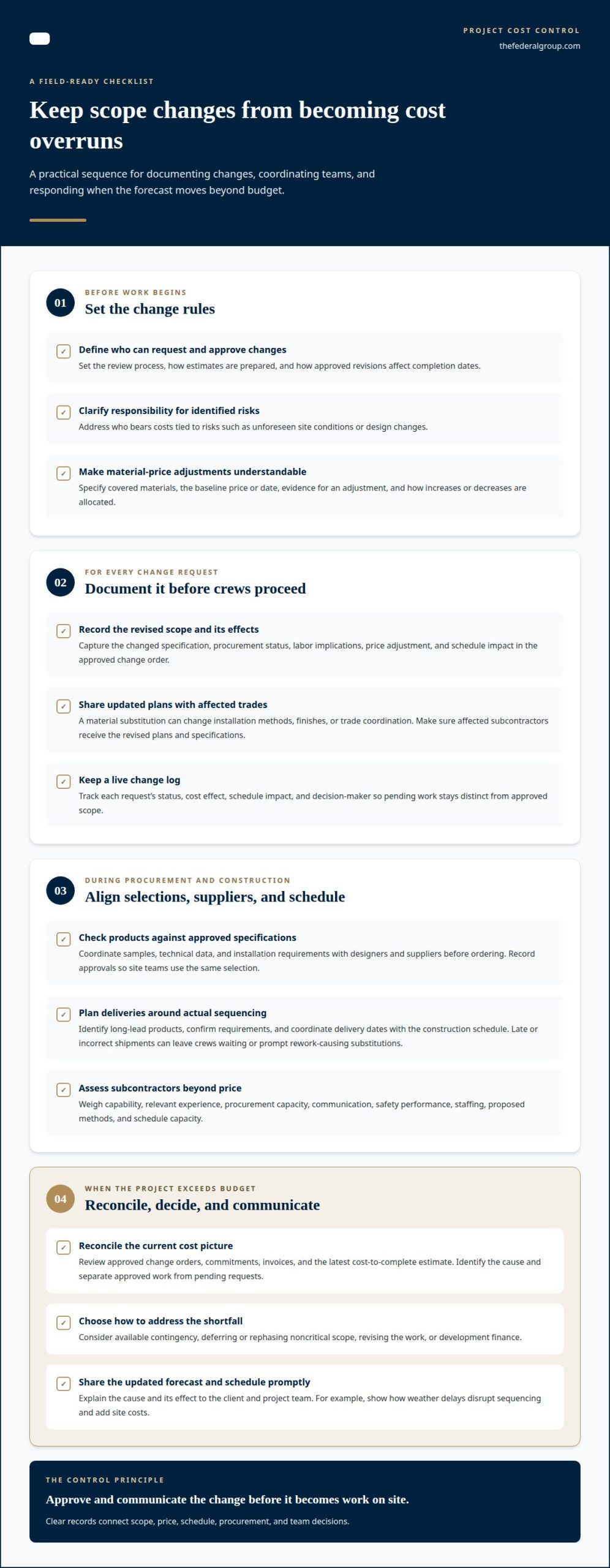
A change order records an approved revision to the original scope, price, or schedule. Before work begins, the contract should define who may request and approve changes, how estimates are prepared, and how revisions affect completion dates. It should also specify who bears costs associated with identified risks, such as unforeseen site conditions or design changes. Clear terms help prevent disputes about whether added work falls within the original agreement.
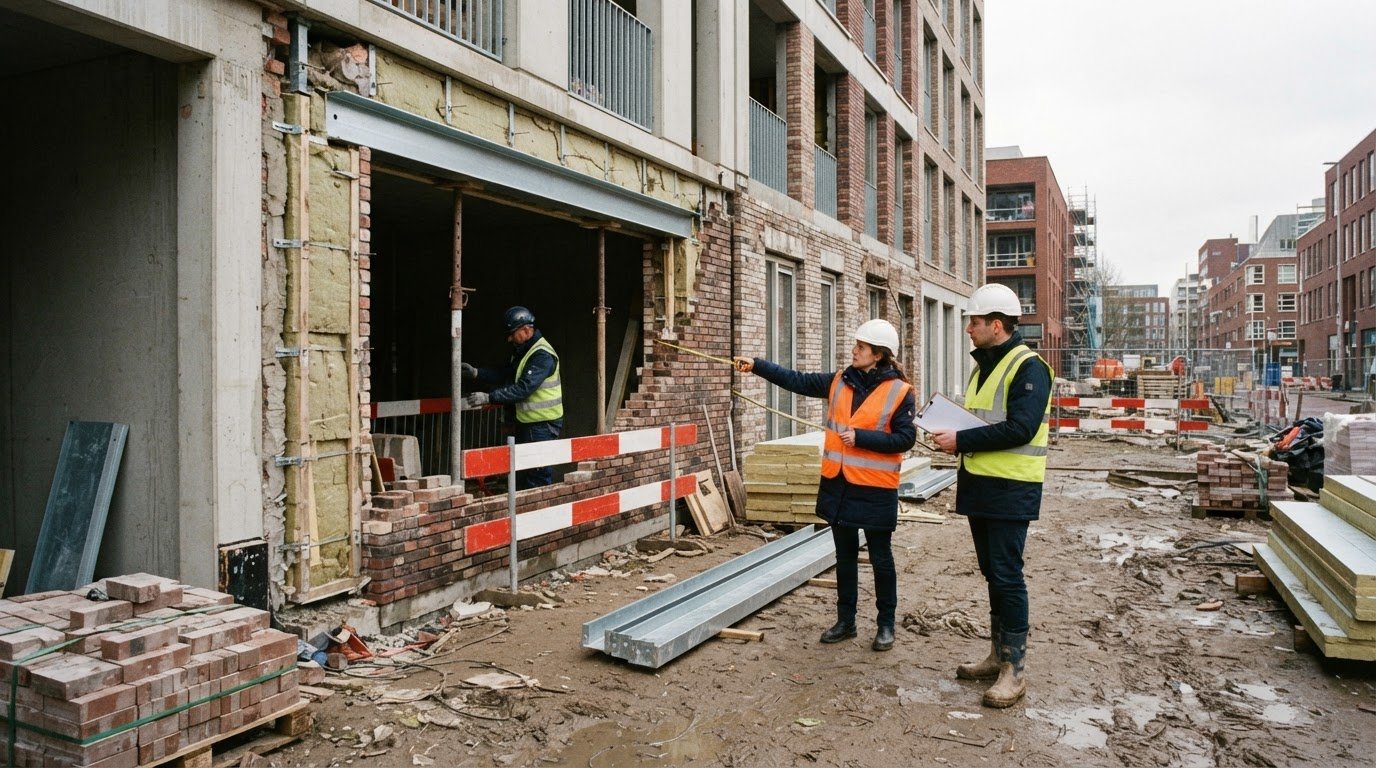
If an owner requests a different façade material, document the revised specification, procurement status, labor implications, and schedule effect. The change order should record the agreed adjustment before crews proceed. Missing details can create mismatched expectations: a material substitution may affect installation methods, finishes, or coordination with other trades. Once approved, share revised plans and specifications with every affected subcontractor.
Material price escalation clauses explain how changes in specified material prices affect the contract amount. A clause can identify covered materials, the baseline price or date, the evidence used to calculate an adjustment, and how the parties allocate an increase or decrease. In U.S. contracts, the clause’s effect depends on its wording. A clearly defined process helps teams respond to price movements during procurement.
When a project exceeds its budget, first reconcile approved change orders, commitments, invoices, and the latest cost-to-complete estimate. Identify the cause, separate approved scope from pending requests, and decide whether to defer, revise, or fund the work. Promptly share the revised forecast and schedule with the client and project team. For example, weather delays can disrupt sequencing and add site costs, so the forecast should show both the cause and its effect.
Plan for change requests by setting a submission and review process before construction. Keep a log of each request, its status, cost effect, schedule impact, and decision-maker. Integrated development delivery connects design decisions with construction planning, helping teams consider scope and execution together.
3. How can contractors better anticipate and overcome these challenges?
Prevent rework by checking each material and product against approved specifications before procurement. A specified finish may require a particular substrate or installation method; an unchecked substitute can mean removal and replacement. Coordinate samples, technical data, and installation requirements with designers and suppliers before ordering. Record approvals so site teams and subcontractors use the same selection.
Choose subcontractors by weighing capability, relevant experience, procurement capacity, communication, and safety performance, not price alone. General contractors can assess comparable work, staffing plans, proposed methods, and schedule capacity. For a complex façade package, confirm that the installer can coordinate materials and sequencing with adjoining trades. Owners should weigh a contractor’s track record and reliability rather than relying solely on the lowest bid.
Plan procurement around the actual schedule. Identify long-lead products, confirm specification requirements, and coordinate delivery dates with construction sequencing. A late or incorrect shipment can leave crews waiting or prompt substitutions that cause rework. Keep stakeholders informed when selections or delivery assumptions change, and update the forecast to reflect the resulting cost and timing effects.
Project managers should track warning signs through regular cost-to-complete reviews: rising commitments, repeated rework, unapproved changes, delayed deliveries, and subcontractor slippage. Compare actual spending and progress with estimates, then investigate variances early. KPMG’s 2015 global construction survey found that 31% of respondents’ projects came within 10% of their budgets, underscoring the value of active tracking. Teams deciding how to handle construction cost overruns should use each review to identify causes and assign timely corrective actions.
End each review by assigning an owner and due date to every action. If an incorrect product threatens installation, pause the affected work, confirm the required specification, and assess schedule effects with relevant subcontractors. Document the decision and inform stakeholders before work resumes. This gives teams a practical way to handle construction cost overruns while limiting avoidable disruption.
4. Construction cost overrun impacts
An overrun can weaken project returns well before final accounts close. Additional labor, materials, and site time consume funds planned for other work. If completion slips, owners may also wait longer for occupancy or operating income. In the United States, 78% of corporate and public real estate owners regularly exceed construction budgets, showing how often forecasts face pressure.
Profitability can tighten across the delivery chain. Construction profit margins dropped by 27% in the first quarter of 2023. When budgets rise without corresponding changes to project value, contractors may absorb costs, renegotiate scope, or face disputes over responsibility. Each outcome can affect cash flow, supplier payments, and the capacity to resource other projects.
Schedule effects can compound financial impacts. The Sydney Opera House was completed ten years late and more than fourteen times over budget. The example shows how a prolonged programme can increase costs and delay a project’s intended benefits. For active projects, connect schedule forecasts with committed spending, remaining work, and decisions that could change delivery dates.
Stakeholders need a shared view of the latest forecast, not just the approved baseline. Construction software can bring commitments, change approvals, progress updates, and cost-to-complete estimates into one reporting process. Review variances regularly, identify their causes, and assign actions to specific people. Accurate, timely reporting helps decision-makers distinguish a temporary timing issue from ongoing budget pressure.
Treat an overrun as a risk to financial performance and delivery, not merely a final-account adjustment. Escalate significant variances early, model their effects on completion and project returns, and document subsequent decisions. This gives owners and delivery teams a clearer basis for adjusting scope, funding, or sequencing.
Discuss your development project to explore a considered path forward when cost pressures affect delivery plans.
The Federal Group
The Federal Group combines development finance, private equity, and integrated design-and-build development across the property sector. For owners managing cost pressure, these capabilities can help bring funding, delivery structure, and project decisions into the same discussion. The right approach depends on the project’s scope, current forecast, and development objectives. Discussing these factors can put cost and schedule impacts in context, while keeping clear scope control and active cost management central. Contact The Federal Group to discuss your development project and its next steps.
Turn cost pressure into a clear next decision
Knowing how to handle construction cost overruns matters when a forecast challenges the project’s original assumptions. Use that point to make deliberate decisions: clarify which outcomes remain essential, identify urgent choices, and align stakeholders on the implications for delivery and investment. A measured response can preserve focus, even when the original plan must change.
Connect the project’s current position with its broader development objectives before choosing a path forward. Consider how funding, ownership priorities, and delivery responsibilities interact before committing to revisions. Clear decisions now can support stronger oversight in the next phase of development.
For a discussion about your project and its next steps, contact The Federal Group.
Move forward with a clear view of the decisions ahead and the outcomes the project must protect.
Frequently Asked Questions
What is a cost overrun in construction?
A cost overrun occurs when a completed project costs more than its approved budget. A project can exceed its budget even when the additional expense comes from approved work rather than an estimating mistake. The key question is whether the current forecast exceeds the authorized financial baseline. Tracking the reason for each variance helps distinguish planned scope changes from unexpected cost pressure.
How can contractors better anticipate and overcome these challenges?
Reduce avoidable surprises by comparing site progress with procurement records and subcontractor commitments during regular reviews. A delayed delivery, for example, may threaten a follow-on trade before it appears as a cost variance. Flag the dependency, identify who is responsible, and revise the work sequence. Clear records of product approvals and installation instructions also help crews avoid preventable rework.
How can contractors create more accurate project budgets and timelines?
Build estimates from coordinated drawings, measured quantities, current labor assumptions, and a realistic work sequence. Test the schedule against procurement lead times, crew availability, and seasonal conditions. If a critical material will arrive after its planned installation date, show the impact on dependent tasks rather than treating delivery as an isolated item. Update forecasts as actual progress replaces planning assumptions.
How common are construction budget deviations?
Some studies indicate that nine out of 10 construction projects face cost overruns. A deviation can be modest or substantial, and its significance depends on the approved budget, remaining work, and project objectives. For useful comparisons, define whether the figure includes approved changes and compare the latest forecast with the same baseline. This keeps changes in scope distinct from uncontrolled cost growth.
What needs to be considered in an accurate building construction budget?
Include measured quantities, labor, materials, equipment, subcontractor packages, and the sequence needed to deliver each scope item. Check whether equipment is available and working or needs servicing or rental. Account for site conditions and seasonal weather that could affect productivity. Make budget assumptions visible so stakeholders can see which design choices or delivery constraints might change the forecast.
How do you calculate a construction project contingency budget?
Multiply the total project budget by the contingency percentage selected for the project’s complexity and risk. A contingency fund of 5-10% of the total budget is advised, depending on those factors. For example, apply the chosen percentage to the approved budget, then track authorized contingency use separately from base-scope spending. This makes remaining reserve visible as the project develops and decisions are made.