Managing cash flow during a construction project through forecasting
11 November 2026A profitable construction project can still run short of cash. Managing cash flow during a construction project means forecasting when money will come in and when costs are due, then adjusting the plan as work progresses.
That timing gap is a familiar pressure: materials, labour, and equipment may need to be paid for before the related client invoice is settled. A forecast makes incoming and outgoing payments visible, helping you spot potential shortfalls early and plan for them.
This guide explains construction cash flow and how to build and update a practical forecast. It covers common challenges, including delayed payments, underbilling, and unexpected costs, and explains when short-term financing or invoice factoring may help bridge a gap. You’ll learn how to connect project costs with payment milestones, compare actual cash movements with expectations, and decide what to do when the numbers change.
Key Takeaways
- Map expected receipts against labour, materials, equipment and overhead costs to spot potential cash gaps before they disrupt work.
- Structure progress billing and payment terms around completed milestones, and follow up promptly on outstanding invoices.
- Update forecasts when costs, schedules or project scope change, then compare actual cash movement with projections.
- Consider short-term financing or invoice factoring when a forecast shows a timing gap, weighing the cost of capital against the project’s needs.
1. Short-term financing and invoice factoring
Construction contracts may allow customers 30, 60, or 90 days to pay an invoice. Meanwhile, payroll, materials, equipment, and subcontractor payments follow the project schedule. That mismatch can leave a contractor short of working cash, even when the project has earned revenue. Invoice promptly when a milestone is achieved or work is completed. Incremental billing can bring receipts forward instead of waiting until project closeout.
Make invoicing a defined process: prepare the invoice, submit the required supporting documents, record its due date, and track the receivable until payment arrives. An accounts receivable log helps identify overdue invoices and supports timely follow-up. Payment method also affects timing. ACH transfers can take multiple days to process, while mailed checks may take weeks to arrive after a client’s accounts payable team prints, signs, and mails them. Online payment options can reduce friction, but the invoice should still state the amount due and payment terms clearly.
Lien waivers and mechanics lien deadlines affect payment administration differently across states. Align waiver requests and progress-payment milestones with the contract and applicable state requirements, and track each document alongside its invoice. Don’t treat a waiver as proof that funds have cleared; record payment status separately.
When a delayed payment creates a cash gap, first follow up on the receivable and compare its expected arrival with upcoming obligations. Short-term financing may bridge the timing difference, while invoice factoring may turn an eligible receivable into earlier cash, subject to its terms. Before choosing, compare the cost of capital and repayment obligations with the cash-flow need. These strategies can help protect supplier relationships and keep work moving, but they won’t fix underbilling or an unprofitable contract. A forecast should show whether the gap is temporary or recurring.
2. What is cash flow?
Cash flow is the money entering and leaving a construction business over time. Net cash flow is calculated by subtracting cash outflows from cash inflows. A positive result means more cash came in than went out during that period, but it doesn’t necessarily mean the project is profitable. Profit compares revenue with total project costs, while cash flow shows whether money is available when expenses fall due.
Front-loading project payments can reduce the amount a contractor must fund before work advances. A deposit or mobilisation payment can help cover early materials and labour, while progress payments can tie receipts to completed stages. Set these milestones out in the contract, with clear billing requirements and approval steps. If client payments arrive only after later stages, early expenses can create a cash-flow gap even when the project’s total revenue is expected to exceed its costs.
Plan accounts payable alongside those receipts. List supplier invoices, subcontractor commitments, payroll, and other expenses by due date, then compare them with expected incoming payments. Suppliers may offer creditworthy contractors net thirty days, while some contractors negotiate 45 or 60 days. Agree extended terms in advance; paying late without agreement can damage supplier relationships and credit standing. Negotiating payment schedules can help align outflows with project receipts.
Deposits and subcontractor clauses also shape payment timing. A contract may require subcontractor payments after the contractor receives a corresponding progress payment from the owner. Any such arrangement needs clear wording and careful review against the project agreements. Document changes to scope, cost, and schedule in signed change orders, then update billing milestones and cash projections. Otherwise, completed additional work may remain unbilled while labour and supplier expenses continue.
For an accurate view, review each project alongside the wider business. One job’s positive balance may be needed to cover another project’s immediate expenses. Managing cash flow means coordinating contract terms, supplier schedules, and work completed, not simply checking whether a project appears profitable on paper.
3. Construction cash flow analysis and forecasting
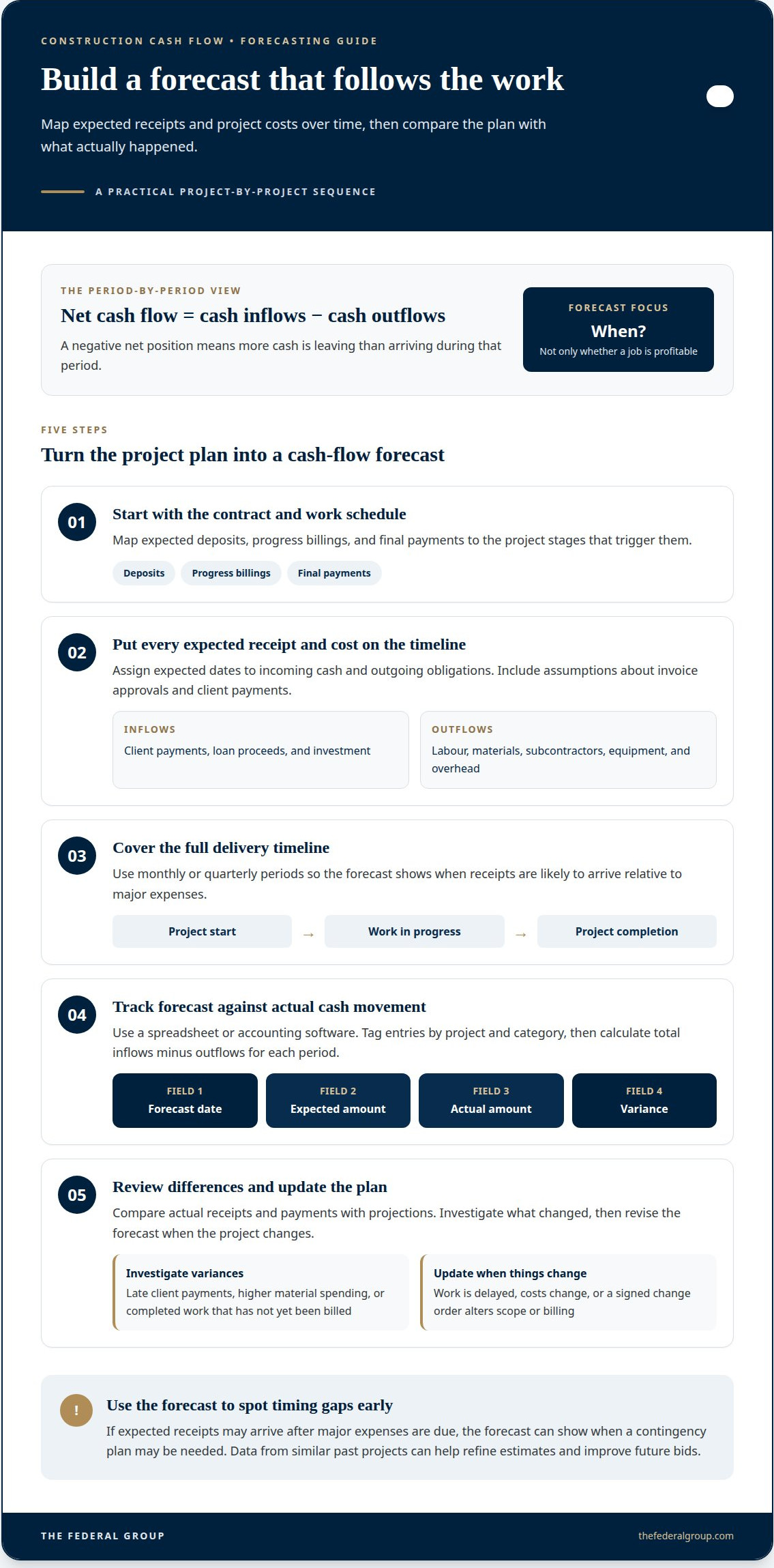
A useful forecast shows when cash enters and leaves, not just whether a job is profitable. For each project, record client payments, loan proceeds, and investment alongside outflows for labour, materials, equipment, and overhead. A negative net position means more cash is leaving than arriving during that period. In construction, this timing view helps a business identify when it may need funds to keep work moving.
Build the forecast from the contract and project schedule. Map expected deposits, progress billings, and final payments to the stages that trigger them. Then assign expected dates to payroll, supplier invoices, subcontractor costs, equipment expenses, and overhead. Include assumptions about invoice approvals and client payments. These entries show whether receipts are likely to arrive before major expenses or whether the project may need a contingency plan.
A project-level forecast should cover the full delivery timeline and use monthly or quarterly periods. Update it when work is delayed, costs change, or a signed change order alters the scope or billing. At each review, compare actual receipts and payments with the forecast and investigate differences, such as late client payments, higher material spending, or completed work that has not yet been billed. Use data from similar past projects to refine estimates and improve future bids.
Track the numbers in a spreadsheet or accounting software with separate columns for forecast date, expected amount, actual amount, and variance. Tag each entry by project and category, then calculate total inflows minus outflows for each period. A spreadsheet suits a simple project if someone updates it consistently; integrated construction software can connect project costs, invoices, and approvals. Maintain one current version, reconcile it against accounting records, and review cash positions regularly. This evidence helps managers prioritize essential expenses, adjust payment schedules, or decide whether to take on additional work without overlooking existing commitments.
4. Cash flow challenges in construction projects
Construction companies face cash pressure when substantial costs arrive before client payments. Materials, labour, and equipment can require cash early, while revenue follows contract milestones. Retentions, variations, and long project timelines can widen the gap. A project may appear profitable on paper yet lack enough cash for immediate obligations. Monitoring balances across the whole business helps reveal when one project’s timing could affect another.
Payment disputes can make the timing problem worse. Delays can leave payroll and supplier commitments exposed, even when work is complete. Track disputed invoices separately from expected receipts, and don’t count a submitted claim as available cash until it is paid.
Costs can also exceed the forecast. Design changes, labour issues, and supply shortages may increase expenses or delay billable milestones. Underbilling creates another risk: when invoices cover less work than has been completed, cash receipts lag behind project progress. At each review, compare completed work, approved changes, billed amounts, and actual costs. A growing gap between completed work and billing deserves prompt attention.
Cash constraints can also compound across concurrent projects. Payroll peaks, asset purchases, and upfront costs for several jobs may draw on the same working capital. A positive balance on one project doesn’t guarantee the business can meet every near-term payment. Maintain a business-wide view, identify essential expenses, and model how schedule delays affect receipts and supplier commitments. Construction net margins are typically 3 or 4 percent, so cost overruns can quickly erode profitability. A contingency reserve and updated forecasts help predict pressure before it disrupts work.
For development projects where funding needs intersect with delivery risk, discuss project funding needs as part of a broader plan for maintaining liquidity and project continuity.
The Federal Group
The Federal Group can be a next step when your construction cash-flow forecast points to broader project funding or delivery decisions. Its Development Finance and Private Equity offerings are relevant to development plans where capital structure and timing need to be considered alongside project costs and expected receipts. Through its Design & Build Development offering, the group also operates as a fully integrated developer, bringing finance and delivery considerations into the wider development context.
Turn to The Federal Group when your project requires a strategic view of funding and development, rather than help with routine invoicing or accounts receivable administration. Clear forecasts, project costs, payment milestones, and the expected funding gap can help frame the discussion.
Contact The Federal Group to discuss your development project.
Put your project’s next decision on a stronger footing
A useful forecast should guide decisions, not sit untouched in a spreadsheet. Use it to assess whether the next stage fits your available capacity, whether commitments align with the project’s direction, and where funding needs warrant a broader development perspective. This makes managing cash flow during a construction project part of strategic planning, not just financial administration.
For projects where capital and delivery decisions are closely connected, The Federal Group brings a finance and development perspective through its Development Finance, Private Equity, and Design & Build Development offerings. Consider whether that combination fits your project’s scale and needs as you decide on the next step.
Contact The Federal Group today to discuss your development plans. A clear view of the project ahead can help you move forward with purpose.
Frequently Asked Questions
What is cash flow?
Cash flow measures money entering and leaving a business during a period. It differs from the cash balance, which is the amount available at a particular moment. A company can have a positive balance today but still face a shortfall later if upcoming expenses fall due before expected receipts arrive. Tracking both views helps distinguish current liquidity from future timing risk.
Why Is It So Important in Construction?
Cash flow matters because construction work depends on coordinated commitments. A contractor needs available funds to keep labour, materials, and subcontractors aligned with the schedule. If cash is constrained, a delayed purchase or missed payment can affect several connected activities. A reliable view of liquidity also helps a business assess whether new work fits alongside its existing obligations.
How to create a construction project cash flow forecast
Managing cash flow during a construction project starts with turning the work plan into dated financial expectations. Divide the schedule into phases, assign expected receipts and costs to each phase, and identify assumptions that could shift timing. Then create an alternative forecast for a delayed approval or changed scope. Comparing scenarios helps show which schedule changes could create the greatest pressure.
How to manage retainage and progress payments in construction
Track each progress payment against the work stage it covers, and record retained amounts separately from cash expected for immediate use. Keep release conditions, approvals, and closeout requirements visible in the project record. This makes it easier to see which funds are outstanding and whether expected receipts depend on unfinished administrative steps or completed work.
How can contractors speed up construction invoice approval and payment
Managing cash flow during a construction project also means reducing avoidable back-and-forth on invoices. Use a consistent invoice format, match billed work to the contract language, and attach the supporting records required for that billing stage. Record who has the invoice and its current status. If approval stalls, follow up with a concise note identifying the invoice, submission date, and pending decision.
What are typical construction payment terms and payment timelines in the US
US construction contracts may allow customers 30, 60, or 90 days to pay an invoice. The contract’s terms and approval process determine the expected schedule, while milestone billing can affect when an invoice becomes payable. Enter the agreed due dates into the project cash plan, and distinguish the invoice date from the expected receipt date when reviewing available funds.
How do lien waivers and mechanics lien deadlines affect construction payments by state
Lien waiver requirements and mechanics lien deadlines vary by state. Align waiver requests and progress-payment milestones with the contract and applicable state requirements, track each document alongside its invoice, and record payment status separately, since a waiver does not prove that funds have cleared.
Construction project cash flow financing options, fees, and interest rates
Short-term financing can bridge a timing gap, while invoice factoring can turn an eligible receivable into earlier cash, subject to its terms. Before choosing, compare the cost of capital and repayment obligations with the cash-flow need.