Which construction sectors are adopting the design-build model
28 October 2026Design-build is used well beyond commercial buildings. In the United States, public- and private-sector projects use it across building, transportation, and water and wastewater markets, including federal, state, and municipal work. For owners streamlining construction with a design-build model, the central question is whether combining design and construction responsibility suits the project.
A project delivery method shapes how design decisions, construction planning, and accountability come together. Design-build brings design and construction expertise into one team, while other approaches keep those roles separate. This article explains how the model works, how owners compare delivery options, and how shared responsibility can help manage risk. It also covers the sectors using design-build and the project conditions that may make an integrated approach a good fit.
Key Takeaways
- Design-build brings design and construction under one contract, giving owners a single point of responsibility and a more integrated project team.
- Compare delivery methods against your project’s scope, procurement requirements, and need for early coordination before choosing an approach.
- Shared responsibility can improve communication and help manage changes, especially when roles, risk allocation, and decision-making are clearly defined.
- Design-build is used across public and private building, transportation, and water and wastewater projects, so the sector alone doesn’t determine whether it fits.
What Is Design-Build Construction?
Design-build combines design and construction in one delivery method, coordinating decisions across both phases.
Definition and Contract Structure
Design-build is a delivery method in which one entity contracts to coordinate both design and construction. Teams can weigh design choices alongside construction planning instead of passing decisions between separate contracts. In the United States, costs vary with project scope, site conditions, materials, schedule, and risk allocation. Owners can clarify these assumptions while defining project requirements.
Delivery and Single-Contract Accountability
A design-build project coordinates design and construction under one contract, giving the owner a single point of contact for delivery. Construction personnel can contribute while design is underway, helping owners understand the cost implications of features or changes earlier. For example, the team can assess how a proposed material affects construction methods before finalizing the design.
Communication, Collaboration, and Quality Control
A shared communication process helps designers and construction personnel resolve project questions together. A design-build firm can manage requests for information within one organization, reducing handoffs between separate teams. Owners can set expectations for regular updates and for recording decisions, revisions, and schedule effects. These processes connect project requirements to design decisions and construction work, making quality control more visible.
Benefits for Owners and Contractors
For owners streamlining construction with a design-build model, early construction input can inform decisions about features, materials, and changes. Contractors can raise considerations about construction techniques and sustainability options during design, rather than after plans are complete. Groundwork may also begin while final designs are still in progress, if the project plan allows. Clear roles and performance expectations in the contract help both parties coordinate their responsibilities.
Owner decision-making and project delivery selection
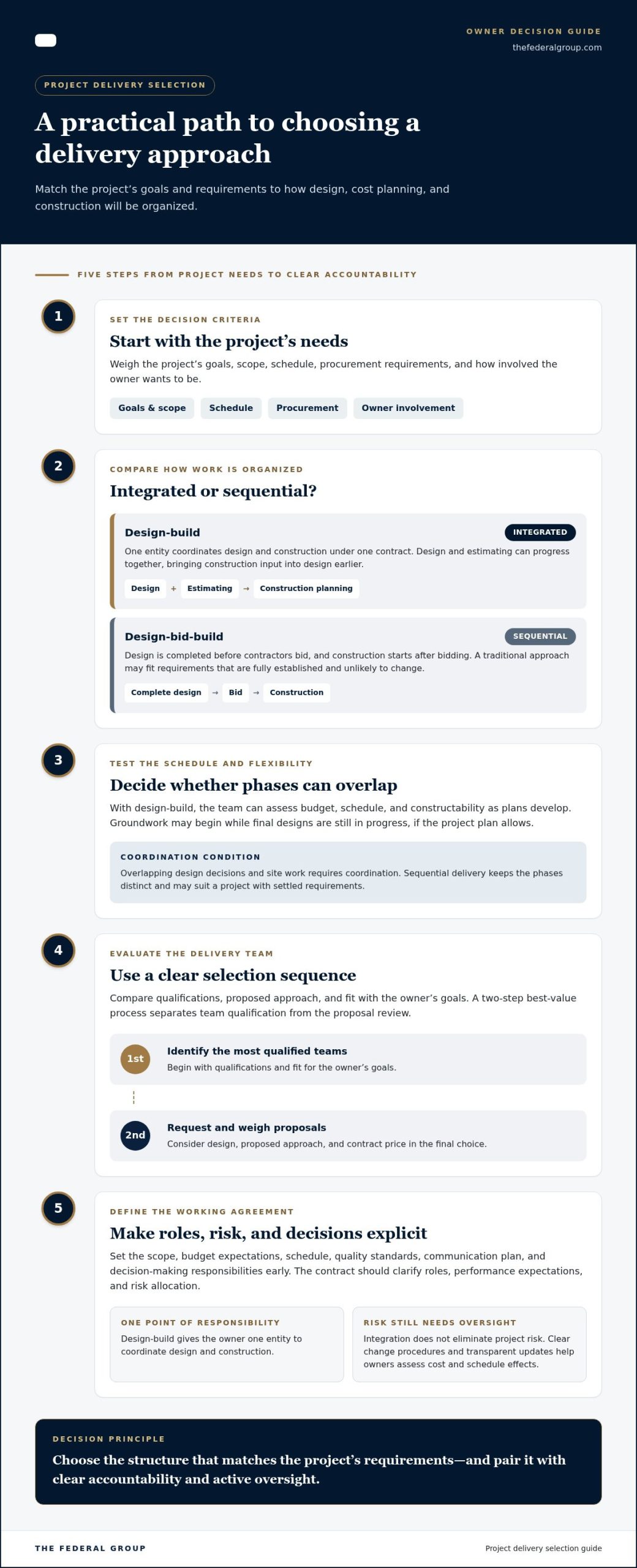
Owners choose a delivery method by weighing project goals, scope, schedule, procurement requirements, and desired involvement. State licensing requirements vary, so relevant qualifications depend on the work and the professional roles involved.
Choosing a Project Delivery Approach
Choose a delivery approach that matches how the project will organize design, cost planning, and construction. In design-bid-build, design is completed before contractors bid, and construction starts after bidding. Design-build can suit owners who want earlier coordination between design and estimating. A traditional approach may fit projects with fully established requirements that are unlikely to change.
Flexibility and Streamlined Project Management
Design-build can support flexibility by allowing design and estimating to progress together during preconstruction. The team can assess budget, schedule, and constructability as plans develop. Owners should define the scope, budget expectations, quality standards, and decision-making responsibilities early. This shared basis helps the team assess proposed changes and keep project management aligned with the intended outcome.
Integrated and Sequential Timelines
Design-build coordinates design and construction planning, while sequential delivery completes design before bidding and construction. Groundwork may begin while final designs are still in progress if the project plan supports that overlap. This can help owners manage schedule priorities, but requires coordination between design decisions and site work. A sequential approach keeps the phases distinct and may suit projects with settled requirements.
Selecting the Design-Builder and Team
Select a design-builder by comparing qualifications, proposed approach, and fit with the owner’s goals. In a two-step best-value process, the owner first identifies the most qualified teams, then requests design and cost proposals. The final choice weighs design, approach, and contract price. A clear scope, schedule, budget, quality expectations, and communication plan give the selected team a defined basis for delivery.
Single-source responsibility and risk reduction
Design-build places design and construction responsibility with one entity, but it does not eliminate project risk. Its advantages depend on clear accountability, risk allocation, and change procedures.
Responsibility and Risk Allocation
A design-build firm manages both design and construction, giving the owner one entity to coordinate the work. This integrated arrangement can reduce miscommunication between architects and construction teams because design decisions and delivery considerations are addressed together. The contract should define roles, performance expectations, and a reasonable allocation of risk. Clear terms help owners understand who is responsible when a design issue affects construction.
Challenges and Risk Management
Design-build still requires active oversight. Critics point to reduced accountability or limited bidding opportunities, and an evolving scope can create uncertainty before work proceeds. For example, if an owner keeps changing functional requirements during design, the team may need more planning to assess cost and schedule impacts. Clear decision-making authority and quality expectations help manage these challenges; integration is not a substitute for governance.
Risk Mitigation and Transparency
Risk management links early collaboration with transparent project controls. Design-build stakeholders can work together on cost estimates to identify potential changes before they become construction issues. Owners can require detailed updates on decisions, budget assumptions, and proposed revisions. This makes the effects of changes easier to assess and gives the team a shared basis for discussing responsibility.
Address change-order management directly in the contract. Define how proposed changes are submitted, evaluated, approved, and recorded, including their effects on scope, schedule, and cost. Integration alone will not protect the owner’s interests if cost review becomes complacent. A documented review process keeps decisions visible and helps distinguish necessary adjustments from scope changes that need renewed planning before construction proceeds.
Construction sectors adopting design-build
Design-build is used in public and private construction across the United States. Its reach includes building, transportation, and water and wastewater projects, from federal work to state and municipal initiatives. The sector matters, but project scope, delivery constraints, and procurement requirements help determine whether the method fits.
Buildings: Public and private building projects can use design-build when their design and construction needs are closely connected. For example, an owner planning a new facility can bring designers and construction professionals into the same delivery process. This coordination helps stakeholders consider how building systems, materials, and construction methods interact. Functional requirements still guide design decisions and quality expectations.
Transportation: Transportation is another established design-build market, including public infrastructure projects. Roads, bridges, and transit facilities illustrate how design choices connect with site conditions and construction sequencing. Engineers and construction teams can coordinate these considerations as work progresses. For publicly funded projects, procurement requirements also shape which delivery method owners can select.
Water and wastewater: These projects are a distinct design-build market alongside buildings and transportation. Treatment facilities and related infrastructure involve multiple systems that must work together. Integrated planning gives stakeholders a shared way to address design, construction, and operational requirements. The owner’s defined performance needs and project scope remain central to the delivery decision.
Across federal, state, and municipal work, design-build adoption does not mean every project should use the same contract structure. Some public projects require traditional bidding, and owners must account for procurement rules alongside schedule, scope, and desired collaboration. Private-sector owners can likewise weigh how much design flexibility and early construction input their projects need. The practical takeaway: select delivery based on project goals and constraints, not sector alone. For development projects where integrated delivery is a priority, explore design-build development.
The Federal Group: Development Finance
The Federal Group can help developers assess finance and delivery together. Its Development Finance offering supports projects that need development-focused funding, while Design & Build Development serves owners considering an integrated delivery approach. The right option depends on the project’s scope, objectives, and delivery structure.
For owners weighing design-build, aligning development planning with project execution can bring key decisions into focus early. Consider how the delivery model fits the asset, the required design coordination, and the responsibilities the project team must manage. The Federal Group also offers Private Equity for projects where that investment approach is relevant.
Contact The Federal Group to discuss your development project and its delivery priorities.
Set Your Project’s Direction
Choosing a delivery method is also an opportunity to define what success means for your development. Before moving forward, align commercial objectives with operating needs, project scope, and appetite for change. That clarity gives stakeholders a stronger basis for evaluating design decisions and managing priorities as work progresses.
For owners streamlining construction with a design-build model, the next step is to connect the delivery strategy with the wider development plan. Consider how project execution, investment priorities, and long-term asset goals fit together. The Federal Group works across property development and finance, making it relevant to owners weighing how these decisions intersect.
Contact The Federal Group to discuss your project’s direction. A clear brief can help set a confident course for the next stage of development.
Frequently Asked Questions
What is the design-build construction model and how does it work?
Design-build is a project delivery method that brings design and construction together in one coordinated team. The owner sets project requirements, and the team develops the design alongside construction planning. For example, engineers can assess whether a proposed building system fits the construction sequence. This coordination supports decisions across the project, while the contract defines responsibilities, scope, and performance expectations.
What are the main benefits of design-build for construction projects?
Design-build’s main benefits include coordinated planning, earlier construction input, and fewer handoffs between design and construction teams. For example, the team can consider material choices alongside installation methods before design is complete. Owners can also set communication and reporting expectations in the contract, giving them a structured view of decisions. These advantages depend on clear requirements and active oversight.
How does design-build compare with design-bid-build in cost, schedule, and quality?
Design-bid-build completes design before contractors bid, while design-build coordinates design and construction planning. This difference can affect how owners manage budget assumptions and schedule overlap. Neither method guarantees a particular cost or quality outcome. Owners should define quality expectations, compare cost proposals against scope, and decide how changes will be evaluated. The chosen method should align with procurement requirements and project priorities.
How much faster can design-build deliver a construction project?
Design-build projects are described as completing 25-33% faster than traditional construction projects. The potential schedule advantage comes from coordinating design and construction and allowing some work, such as groundwork, to begin before final designs are complete. Actual sequencing depends on design readiness, site conditions, and project coordination. Owners should examine the proposed schedule and its assumptions when assessing expected completion.
What are the steps to plan and deliver a design-build project?
Owners can organize planning around a sequence of decisions:
- Define project requirements, scope, budget expectations, and quality goals.
- Set selection criteria and identify qualified design-build teams.
- Align the selected team around design, cost, schedule, and constructability.
- Document responsibilities, change procedures, and communication expectations.
- Coordinate construction, then complete inspections, documentation, and handoff.
These stages give stakeholders a shared framework from early planning through project closeout.
How do owners select and contract with a design-build team?
Assess a design-build team by reviewing relevant project portfolios, client testimonials, and its commitments to safety and transparency. Compare the proposed approach with the project’s scope and priorities, not just the design concept. The contract should define roles, performance expectations, communication pathways, risk allocation, and change procedures. These details establish how the owner and team will make and document decisions.