Strategic Capital Solutions for Real Estate Developers
3 October 2026The lowest-cost funding option can become the most expensive choice if it arrives too late or does not fit the next project milestone. Choosing capital solutions real estate developers can use effectively means looking beyond headline terms to timing, risk, control and execution.
Funding options can appear interchangeable, but development finance, bridging loans and private equity serve different purposes. A structure that supports an acquisition may not suit construction, while short-term finance can create pressure if the repayment or refinancing plan does not align with the project schedule. Developers also need to weigh repayment obligations against the ownership and decision-making implications of bringing in equity partners.
This guide explains how to match each form of capital to a project’s stage and requirements, compare the trade-offs, and assess how financing fits the development plan. The Federal Group provides development finance, bridging loans and private equity, alongside Federal Holdings’ integrated design and build capability, bringing funding considerations together with project delivery.
Key Takeaways
- Match capital solutions real estate developers use to the project’s stage, funding purpose, risk and execution plan.
- Distinguish development finance, bridging loans and private equity by their roles, repayment profiles and ownership implications.
- Compare more than the headline funding amount: assess drawdown conditions, security, decision rights and repayment obligations.
- Map sources and uses against milestones, assumptions and contingencies to spot potential funding gaps before they disrupt delivery.
- Consider how finance and development execution fit together, including Federal Holdings’ integrated design and build capability.
Capital Solutions for Real Estate Developers: Start With the Project Need
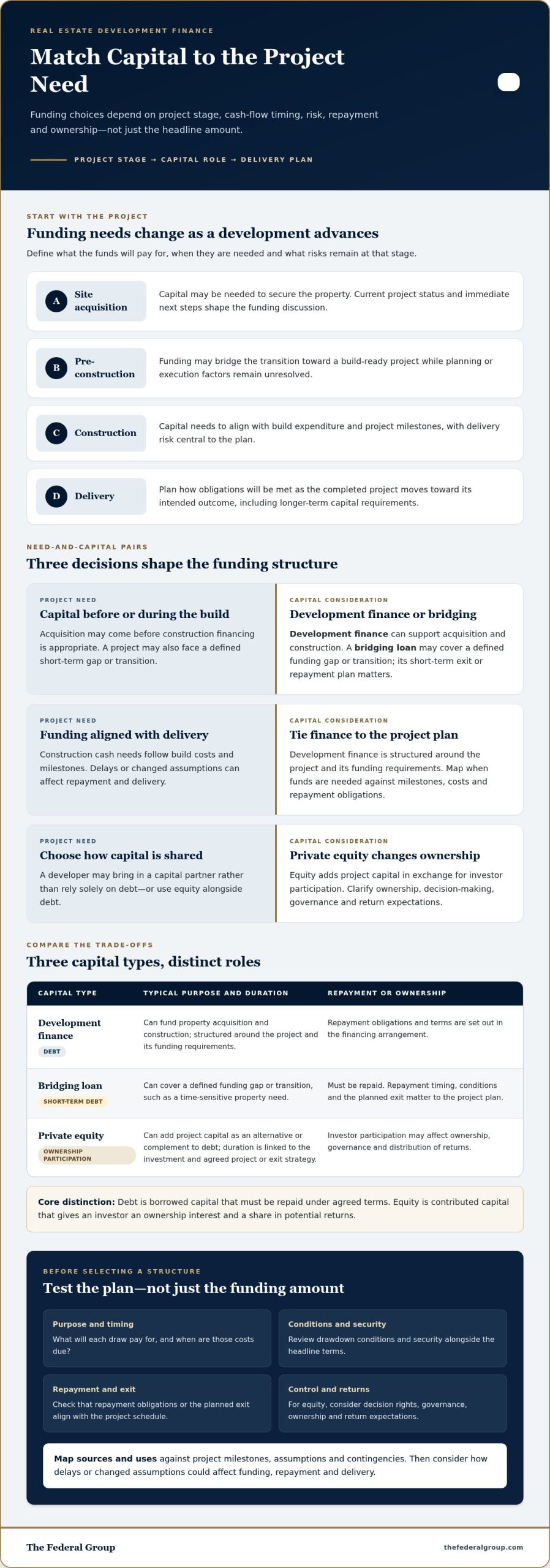
A development project rarely needs one kind of funding from start to finish. Site acquisition may require capital before construction financing is appropriate. Later, the project may need funding aligned with build costs, cash flow and delivery milestones. Start by defining what the funds will pay for, when they are needed and what project risks remain at that stage, rather than focusing only on the largest amount available.
A capital solution is a funding structure and partnership designed around a development project’s stage, risks, cash flow and execution requirements, rather than a single loan product. For capital solutions real estate developers assess, this means evaluating how debt, equity and relevant development capabilities may fit into one coherent plan. It is project finance, not general banking or a personal residential mortgage.
What does capital solutions mean in real estate development?
Capital provision addresses how a development is funded and how that capital is repaid or rewarded. Debt creates repayment obligations; equity involves shared ownership or returns. Where relevant, development capability can also connect the funding strategy with project delivery. For example, a developer acquiring a site with planning work still ahead may need a different funding approach from one ready to begin construction. The stages of the real estate development process help frame those changing requirements.
Which project stages create different funding needs?
Funding discussions change as a project advances. Planning status, the timing of cash needs and uncertainty around delivery all affect the structure, risk and conditions that may be appropriate. Use a stage map to identify the need before comparing capital types:
- Site acquisition: Capital may be needed to secure the property. The project’s current status and immediate next steps shape the funding discussion.
- Pre-construction: Funding may cover the transition from acquisition toward a build-ready project, while planning or execution factors remain unresolved.
- Construction: Capital needs to align with build expenditure and project milestones, with delivery risk central to the plan.
- Delivery: Plan how obligations will be met as the completed project moves toward its intended outcome, including any longer-term capital requirements.
These stages are not interchangeable. A short-term funding need during a transition differs from capital intended to support construction or a longer hold. Map expected uses of funds and cash-flow timing against milestones. Then test how delays or changed assumptions could affect repayment and delivery. For broader context on financing international projects, see the international property development finance guide.
Debt, Bridging Finance, and Equity: How Developer Capital Works
Each capital type answers a different funding need. Development finance can support property acquisition and construction; a bridging loan can cover a defined short-term gap or transition; private equity can add capital in exchange for participation in ownership and potential returns. Developers may use one structure or combine them, depending on the project’s funding plan.
Debt is borrowed capital that must be repaid under agreed terms; equity is contributed capital that gives an investor an ownership interest and a share in the project’s potential returns. That difference affects more than repayment. It can also shape control, governance and how project risks and rewards are shared.
| Capital type | Typical purpose | Duration | Repayment or ownership implications |
|---|---|---|---|
| Development finance | Funding property projects, including acquisition and construction. | Structured around the project and its funding requirements. | Debt, with repayment obligations and terms set out in the financing arrangement. |
| Bridging loan | Covering a defined funding gap or transition, such as a time-sensitive property need. | Short-term by design, with an exit or repayment plan to consider. | Debt that must be repaid; repayment timing and conditions matter to the project plan. |
| Private equity | Adding project capital as an alternative or complement to debt. | Typically linked to the investment and agreed project or exit strategy. | Investor participation may affect ownership, governance and the distribution of returns. |
When can development finance or a bridging loan fit?
Development finance is relevant when a project requires capital for acquisition, construction or both. Bridging finance may fit a narrower need: funding a transition or temporary gap before another planned source of capital becomes available. To distinguish the two, list the costs each draw will cover, when those costs are due and how repayment fits the project’s next steps. The Federal Group provides both development finance and bridging loans for property projects.
When might a developer consider private equity?
Equity may suit a project where the developer wants to bring in a capital partner rather than rely solely on debt, or to complement debt within a broader funding structure. Before proceeding, define how ownership, decision-making, governance and return expectations will align. These arrangements are negotiated for the investment, not universal terms. For a deeper look at partnership considerations, read this real estate private equity partner guide.
Compare capital solutions real estate developers consider against the project’s cash-flow plan and intended exit, not just the initial funding amount. To see how these funding capabilities sit within a broader property development offering, explore The Federal Group’s property finance and development capabilities.
How to Compare Capital Solutions for a Development Project
A headline funding amount is only one part of a capital decision. Developers also need to understand when funds can be drawn, what they can be used for, what security or participation is involved, and how the arrangement responds if planning, construction or the exit strategy changes. Compare each option against the project’s actual requirements, not assumptions about what a financing label guarantees.
Which financing criteria matter beyond the headline amount?
Use a consistent set of questions for an internal investment review. The answers should connect the proposed structure to project milestones, cash flow and risk allocation.
| Review criterion | Question to assess |
|---|---|
| Stage and purpose | Does the capital address the current need, such as acquisition, pre-construction or build costs? |
| Availability and drawdown | When can funds be accessed, what conditions apply to each draw, and do they align with project milestones? |
| Permitted uses | Which costs can the funding cover, and are those uses consistent with the project budget? |
| Repayment or return | What triggers repayment or investor returns, and does that profile fit forecast cash flow and the planned exit? |
| Security and risk | What assets or project risks are involved, and how could delays or changed assumptions affect the arrangement? |
| Control and governance | What decisions remain with the developer, and what consent or participation rights are attached to the capital? |
Test the structure against more than the base case. If planning takes longer than assumed, construction costs or delivery timing change, or the intended exit shifts, consider the effect on funding access, repayment and project control. For example, compare the timing of planned draws with the dates when major project costs fall due, then identify which assumptions could leave a cash-flow gap. Jurisdiction-specific legal, tax and regulatory implications also warrant review by qualified professionals familiar with the relevant project and investment.
How do debt and equity change control and risk?
Debt creates contractual repayment obligations, while equity involves an investor’s participation in ownership or project returns. The details vary by agreement: debt may carry security and conditions, while equity may include governance or decision rights. Neither structure automatically transfers all project risk or control. The documents determine how responsibilities, decisions and outcomes are allocated.
Capital fit depends on project requirements, not labels alone. For capital solutions real estate developers compare, assess the full terms alongside timing, risk allocation and execution needs. A structure that looks suitable based on the amount may still conflict with the project’s drawdown schedule, repayment capacity or preferred governance model.
A Practical Framework for Matching Capital to Project Requirements
A disciplined capital review turns the project plan into a clear funding brief. It helps developers separate the immediate need from later requirements, test assumptions and consider how financing choices interact with delivery responsibilities. Use the following steps as an internal assessment, adapting the information to the project rather than treating it as a fixed eligibility checklist.
What information should a developer prepare?
Set out the asset, development plan and current stage, then connect the amount sought to specific uses. Record expected milestones, cash-flow assumptions, key risks and the anticipated repayment or realization pathway. A clear outline of sources and uses helps show when funds are needed and what they are expected to cover. This creates a practical basis for discussing structure without presuming that every transaction calls for the same documents or criteria.
- 1. Define the purpose. Identify what the capital will fund, such as acquisition, pre-construction activity or construction expenditure.
- 2. Locate the project stage. Describe progress to date and the milestones that must be reached before the next phase.
- 3. Map timing. Align expected funding availability and drawdowns with when project costs fall due.
- 4. Assess risk and assumptions. Note planning, procurement, construction and delivery dependencies, including what may change if assumptions prove inaccurate.
- 5. Set the partnership preference. Clarify the desired balance between repayment obligations, ownership participation and decision-making input.
How should capital align with delivery and execution?
Review the financing plan alongside the work programme. A mismatch between drawdown conditions and the timing of design, procurement or construction costs can create pressure, even if the overall capital requirement appears covered. Map funding against milestones and identify where a delay, revised scope or changed delivery sequence could affect cash flow or the planned exit.
Execution responsibilities matter, too. Consider who is managing design coordination, procurement, construction and delivery, and how those responsibilities connect to funding assumptions. An integrated design and build approach can bring delivery planning into the wider project strategy, but it does not remove project risk or guarantee a particular outcome. For lifecycle context, read the integrated design and build development guide.
Use the completed assessment to compare capital solutions real estate developers may consider against the same project facts: purpose, timing, risk allocation and preferred partnership model. This keeps the decision anchored in execution rather than a funding label alone.
Explore The Federal Group’s property finance and development capabilities to see how capital and delivery expertise can be considered together.
The Federal Group: Connecting Property Capital With Development Execution
A development’s funding strategy is strongest when considered alongside the work required to deliver it. The Federal Group provides development finance, bridging loans and private equity for international property projects, including funding support for acquisition and construction. Through Federal Holdings, the group also operates as an integrated design and build developer, managing projects from architectural design through construction.
These are distinct capabilities, but they can inform a broader project approach. Financing decisions affect how a development is structured; design and construction responsibilities shape the milestones, cash-flow requirements and delivery considerations that capital planning must account for. Considering both can help frame project requirements across the lifecycle, though it does not remove project risk or guarantee an outcome.
How financing and development capabilities work together
The group’s finance role encompasses development finance, bridging finance and private equity. Federal Holdings’ design and build function covers project delivery from architectural design through construction. Considered together, these capabilities connect capital discussions with execution requirements, helping frame funding around what the project needs to progress. The appropriate structure still depends on the project’s particulars and agreed terms.
What is the next step for developers assessing capital solutions?
Bring the project’s current stage, intended use of funds and delivery priorities into a strategic discussion. A concise outline of the asset, key milestones, major assumptions and anticipated repayment or realization pathway can keep the conversation focused on the project’s needs, rather than financing in isolation.
As you prepare, clarify:
- Project stage: Where the development stands and what milestone comes next.
- Funding purpose: Which acquisition, construction or transition requirements need capital.
- Delivery priorities: The design, procurement and construction responsibilities that shape timing and execution.
For developers assessing capital solutions real estate developers can use across a project lifecycle, this preparation creates a practical starting point for evaluating fit. The Federal Group’s finance and development capabilities bring funding and delivery considerations into the same strategic conversation, with the project’s requirements at the center.
Discuss your development opportunity with The Federal Group and outline the project stage, funding purpose and execution priorities you’re working toward.
Build Your Capital Strategy Around the Project Ahead
The right funding structure follows the project’s needs. Development finance, bridging loans and private equity each have distinct implications for timing, repayment, ownership and control, so compare terms against project milestones, risk and execution priorities, not the funding label alone.
A clear capital plan connects sources and uses with cash-flow assumptions, delivery responsibilities and the intended repayment or realization pathway. For capital solutions real estate developers can put to work strategically, finance and execution belong in the same conversation. The Federal Group provides international property finance and development capabilities, including development finance, bridging loans and private equity. Through Federal Holdings, its integrated design and build capability spans architectural design through construction.
Set out your project stage, funding purpose and delivery priorities, then discuss your property development capital requirements with The Federal Group.
Frequently Asked Questions
What are capital solutions for real estate developers?
Capital solutions are funding structures and partnerships shaped around a development’s purpose, stage, risks and delivery plan. Debt provides capital with repayment obligations; bridging finance addresses a defined short-term gap or transition; equity brings investor participation in ownership or returns. A broader strategy may also consider how project execution capabilities connect with funding needs. The right mix depends on the development, its cash flow and the terms agreed.
What types of capital are available to property developers?
Property developers may consider development finance, bridging loans and private equity. Development finance can support project acquisition and construction, while bridging loans are short-term capital for a defined funding gap or transition. Private equity contributes investment capital in exchange for agreed participation in ownership or returns. These structures have different repayment, timing and control implications. Their terms depend on the project, its risks, funding purpose and proposed arrangement.
When should a developer consider a bridging loan?
A developer may consider a bridging loan when a short-term funding need arises during a defined project transition, such as securing an acquisition before a planned next funding stage. Connect the borrowing period and drawdown needs to the project schedule. Before proceeding, assess the intended repayment source, timing assumptions and consequences of delay. A bridging structure should fit a considered exit plan, not rely on an uncertain future event.
How do development finance and private equity differ?
Development finance is debt, so the developer takes on repayment obligations under agreed terms. Private equity involves an investor participating in ownership or project returns, with the arrangement shaping how risks and rewards are shared. Equity may involve governance or decision rights, while debt may include security and other conditions. Neither structure has universal terms. Compare the proposed agreements to understand repayment, control, risk allocation and alignment with the project’s objectives.
How can developers choose the right capital structure?
Start with the project stage and the specific purpose of the funding, then map capital needs against milestones and cash flow. Assess delivery risks, repayment capacity, potential changes to the exit plan, and the control or governance implications of each structure. Compare full terms rather than labels or headline amounts. For cross-border projects, include relevant legal, tax and regulatory considerations in a review with qualified professionals familiar with the transaction and jurisdiction.
Can property development finance support both acquisition and construction?
It can support acquisition, construction or both, depending on the project’s funding purpose and the agreed structure. Identify how much capital is needed for each phase, when costs are expected to arise, and how funding access aligns with milestones. Planning status, execution assumptions and repayment strategy also shape the financing discussion. No single structure or set of terms applies to every project, so assess the arrangement against its specific requirements.
What should a developer prepare before discussing capital solutions?
Prepare a concise project overview covering the asset, development plan and current stage. Set out the funding requirement, intended uses, project schedule and key milestones, alongside the assumptions that underpin costs and cash flow. Identify material risks, contingency needs and the anticipated repayment or realization pathway. This information helps focus a discussion on project fit, timing and execution priorities. Capital solutions real estate developers consider should be assessed against these project-specific details.